Marketing & Email
Beehiiv
Beehiiv is one of the clearest newsletter-native platforms for creators and publication-led teams, earning 8.8/10.
- Last updated
- Pricing checked
We may earn a commission if you buy through this link, at no extra cost to you.
Marketing & Email
Beehiiv is one of the clearest newsletter-native platforms for creators and publication-led teams, earning 8.8/10.
We may earn a commission if you buy through this link, at no extra cost to you.
The essentials
Bottom line: Beehiiv made the core newsletter workflow unusually cohesive: one post became an email, a public web page, a tracked link, and an exportable report. Free is generous, but automations start on Lite and white-label features and higher limits move serious publishers toward Pro.
Beehiiv is one of the clearest newsletter-native platforms for creators and publication-led teams, earning 8.8/10.
At a glance
Audience fit

Beehiiv positions itself as a newsletter publishing system rather than a traditional campaign tool with a blog bolted on. The product combines email creation, a hosted publication site, audience records, analytics, referrals, recommendations, monetization, and paid tiers in one workspace. That orientation was visible from onboarding through reporting: the post remained the central object, and email/web distribution were different outputs of the same editorial asset.
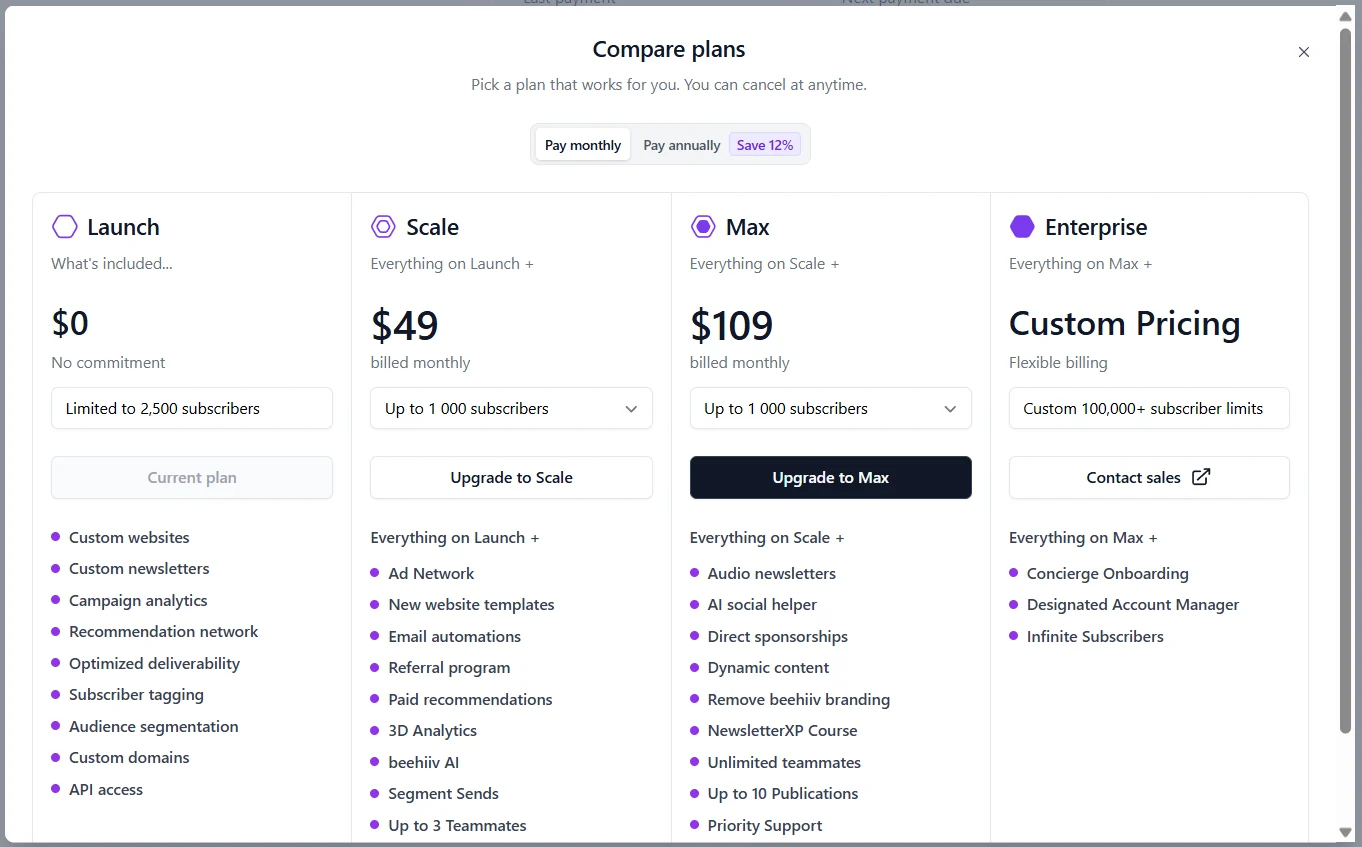
In our August 2026 test, the account technically stayed on the then-named Launch plan while a 14-day Max-feature trial exposed premium areas. The billing page showed no payment history or next payment, and the in-product trial notice said that premium use would end unless the account upgraded. Those historical names match the captured account; Beehiiv now calls the corresponding plans Free and Pro.
Our first registration attempt on August 28 did not receive the email code before the verification window expired. Beehiiv support later removed the incomplete signup, and the August 31 registration completed with email and SMS verification. Because the cause was never established, this review records the interrupted first attempt and successful second attempt without attributing blame.
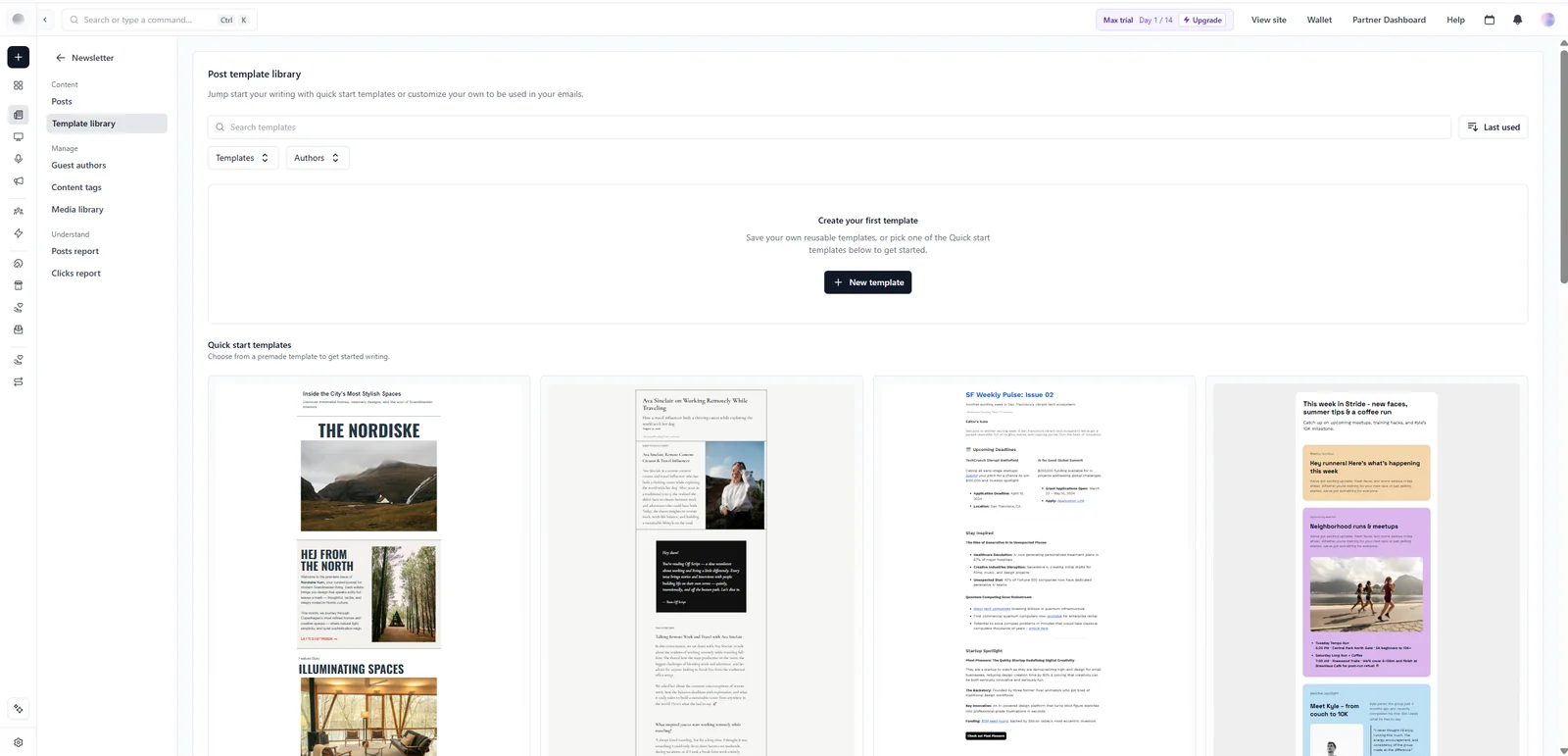
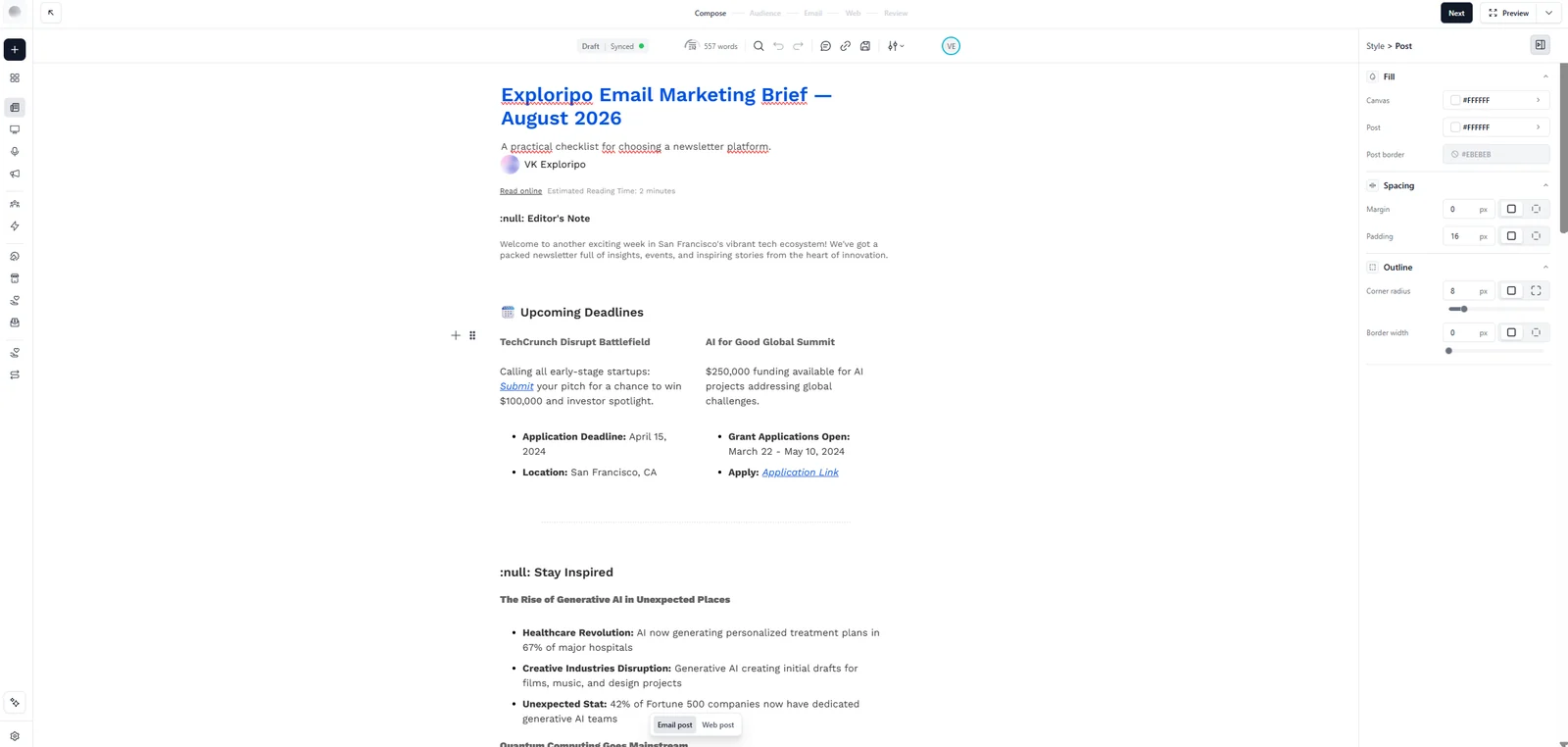
The template library offered quick-start layouts alongside the option to save reusable templates. We selected a detailed weekly-pulse layout, changed the title, subtitle, editor’s note, and a two-column checklist, and repeatedly saw the document return to `Synced`. The editor supported inline text, links, columns, formatting, and post-level style controls.


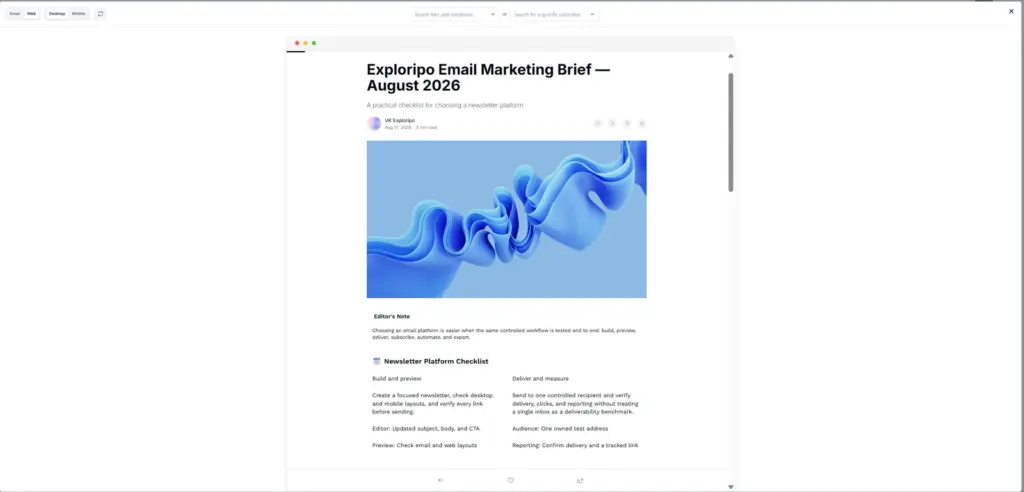
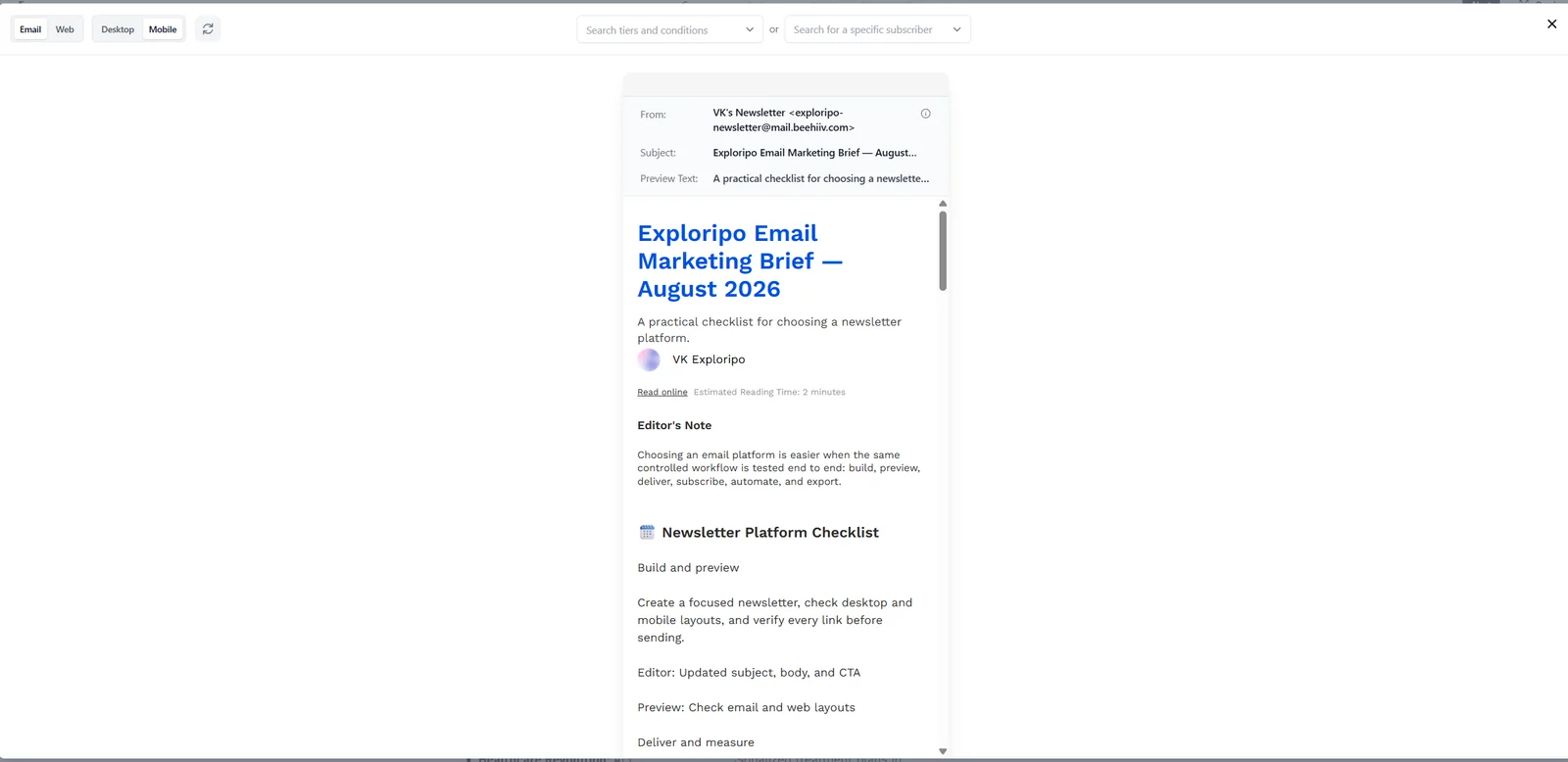
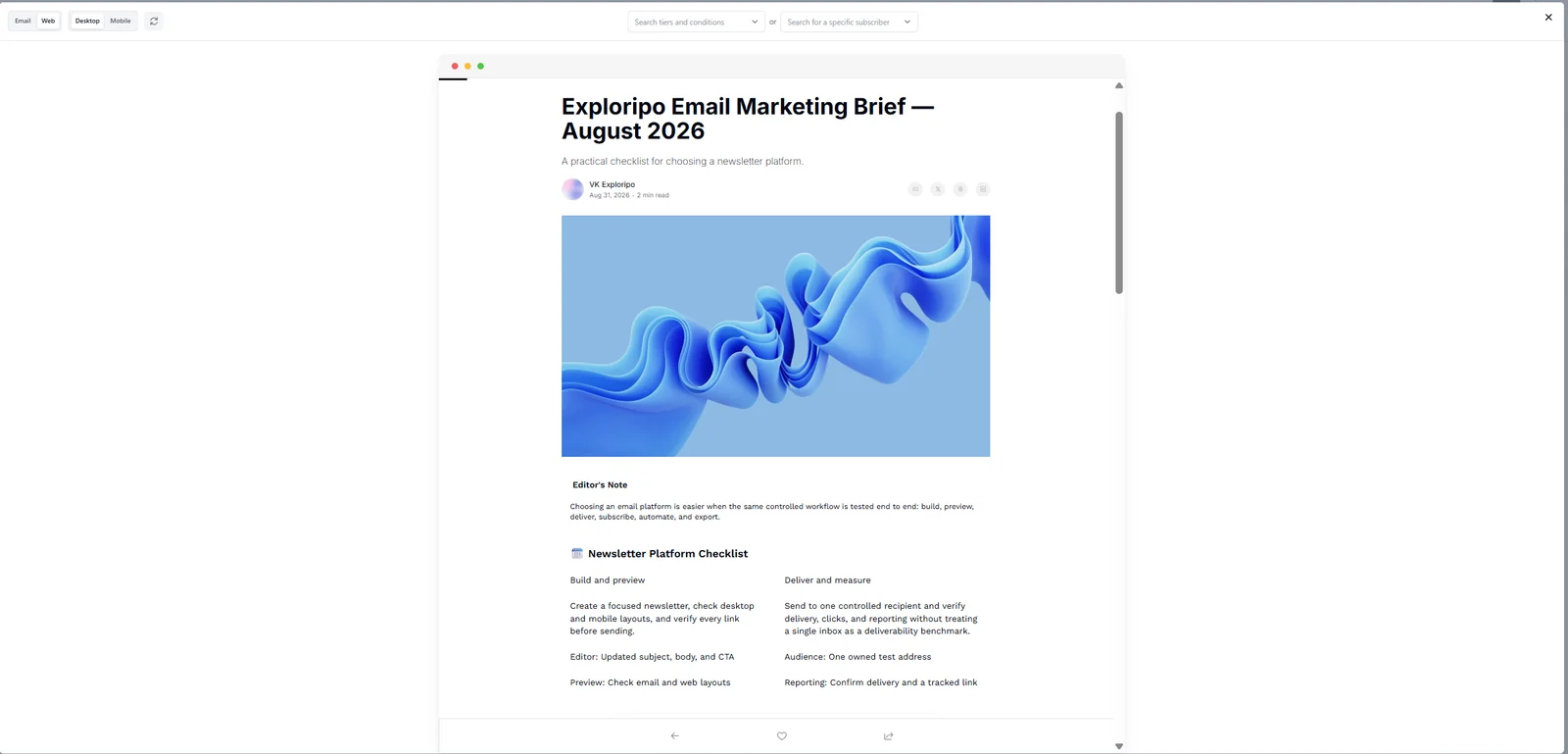
Preview is a product strength. Email and Web each had Desktop and Mobile modes. The mobile email preview stacked the checklist cleanly, while the web version used a wider editorial layout with a hero image, publication date, social controls, and a black headline instead of the email’s blue treatment. These were visible design differences, not surprises discovered after send.


The subscriber profile aggregated status, tier, source, referral URL, posts, lists, automation history, polls, referrals, billing, orders, and event history. Tags were easy to inspect but less elegant to create and attach: inline search only found existing tags, central management created the tag, and a second profile step assigned it.
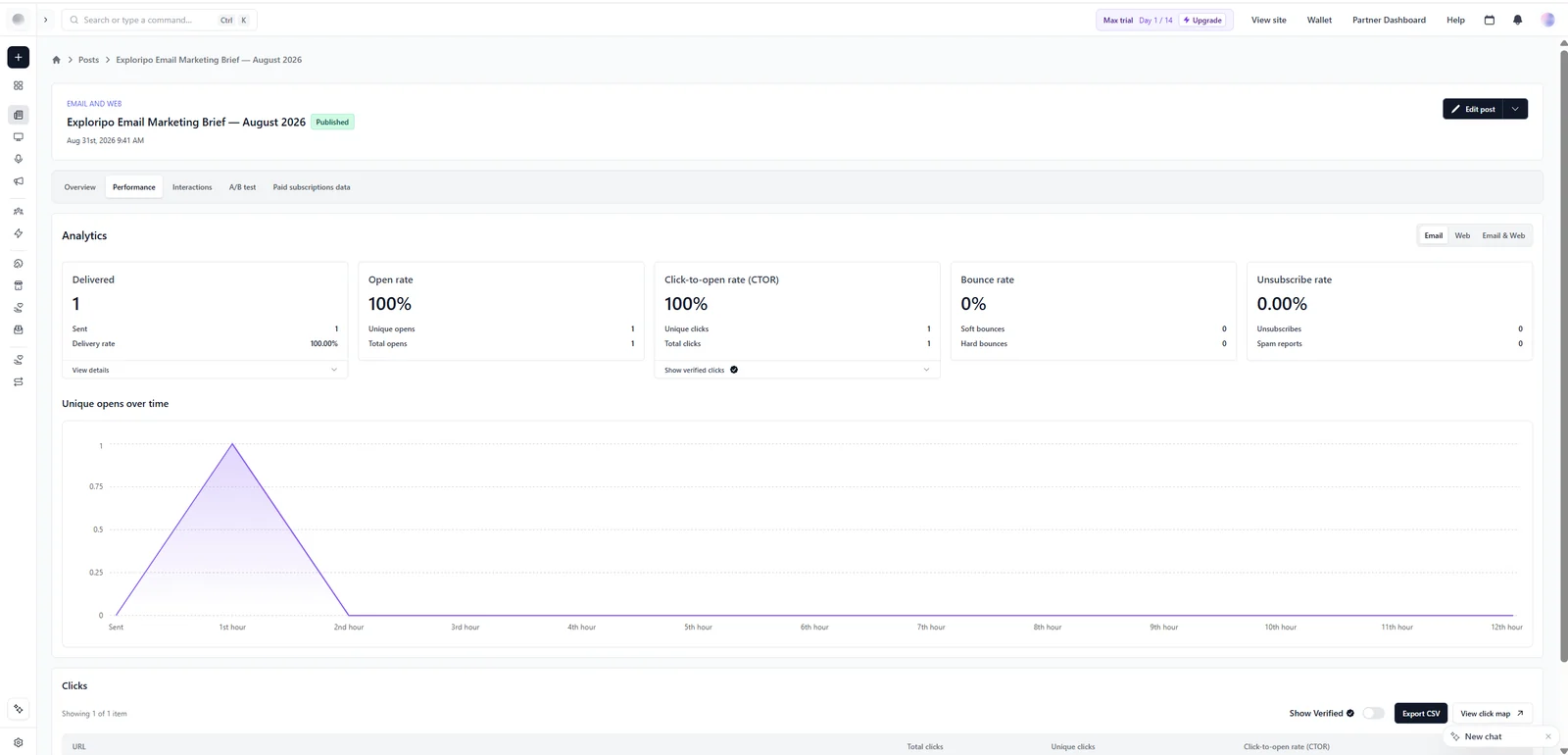
Post reporting showed delivery, opens, CTOR, bounces, unsubscribes, and link-level clicks. Export was asynchronous but transparent: a toast explained that the file would be emailed, the export center showed completion, and the CSV contained the expected one-row result.

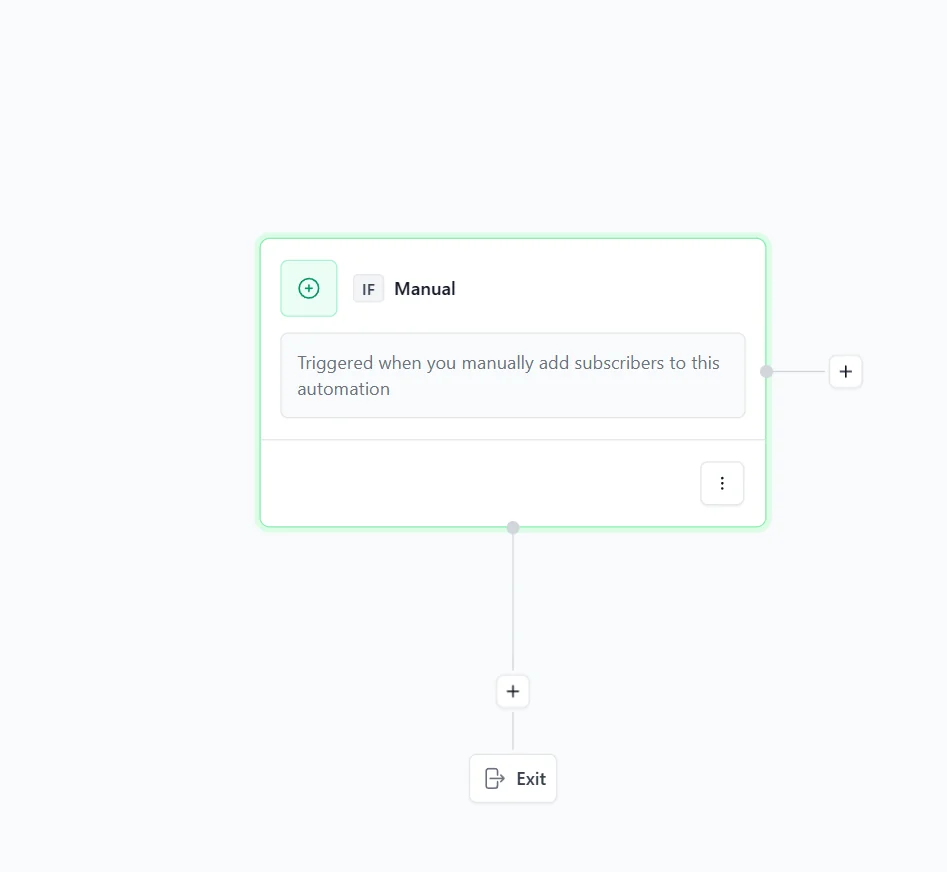
In our August 2026 test, automation discovery was broad. The trigger catalog covered subscription, form, survey, click, poll, referral, segment, list, payment, purchase, podcast, API, manual, and inactivity events. The visual canvas used nodes, branches, plus controls, and Exit. Visible actions included email, subscriber updates, webhooks, and timed waits.
Beehiiv’s wider growth and revenue proposition includes recommendations, referrals, paid subscriptions, sponsorships, an Ad Network, podcasts, and publication/site tools. Those capabilities help differentiate the platform, but most were not executed in this controlled session and are described from official current plan material rather than hands-on proof.

Free to 2,500 subscribers; Lite from $59/month or $49/month with yearly billing
Current pricing was rechecked on October 11, 2026 at the 1,000-subscriber tier. Free is $0 for up to 2,500 subscribers. Lite is $59 with monthly billing or $49 per month with yearly billing; Pro is $109 monthly or $95 per month with yearly billing. Enterprise pricing is custom, and paid prices rise with subscriber tier.
| Plan | Current price at 1,000 subscribers | Current plan limit | Key boundary |
|---|---|---|---|
| Free | $0/month | Up to 2,500 | Unlimited sends and core newsletter, website, podcast, community, and digital products |
| Lite | $59 monthly; $49/month with yearly billing | Up to 100,000 | Up to 10 live automations; 2 seats; 3 publications; 12-month analytics history |
| Pro | $109 monthly; $95/month with yearly billing | Up to 250,000 | Unlimited live automations; click triggers and A/B tests; branding removal; 10 seats and publications |
| Enterprise | Custom | Custom | Unlimited seats, advanced security and infrastructure, concierge onboarding |
Beehiiv’s October 2026 change replaced Launch with Free, Scale with Lite, and Max with Pro; Enterprise kept its name. These are replacement names, not extra tiers. New pricing applied to new customers from October 1, while existing customers transition at their first renewal on or after November 1, 2026.

$0/month
Free forever
$59/month
$49/month with yearly billing
$109/month
$95/month with yearly billing
Custom
Contact sales
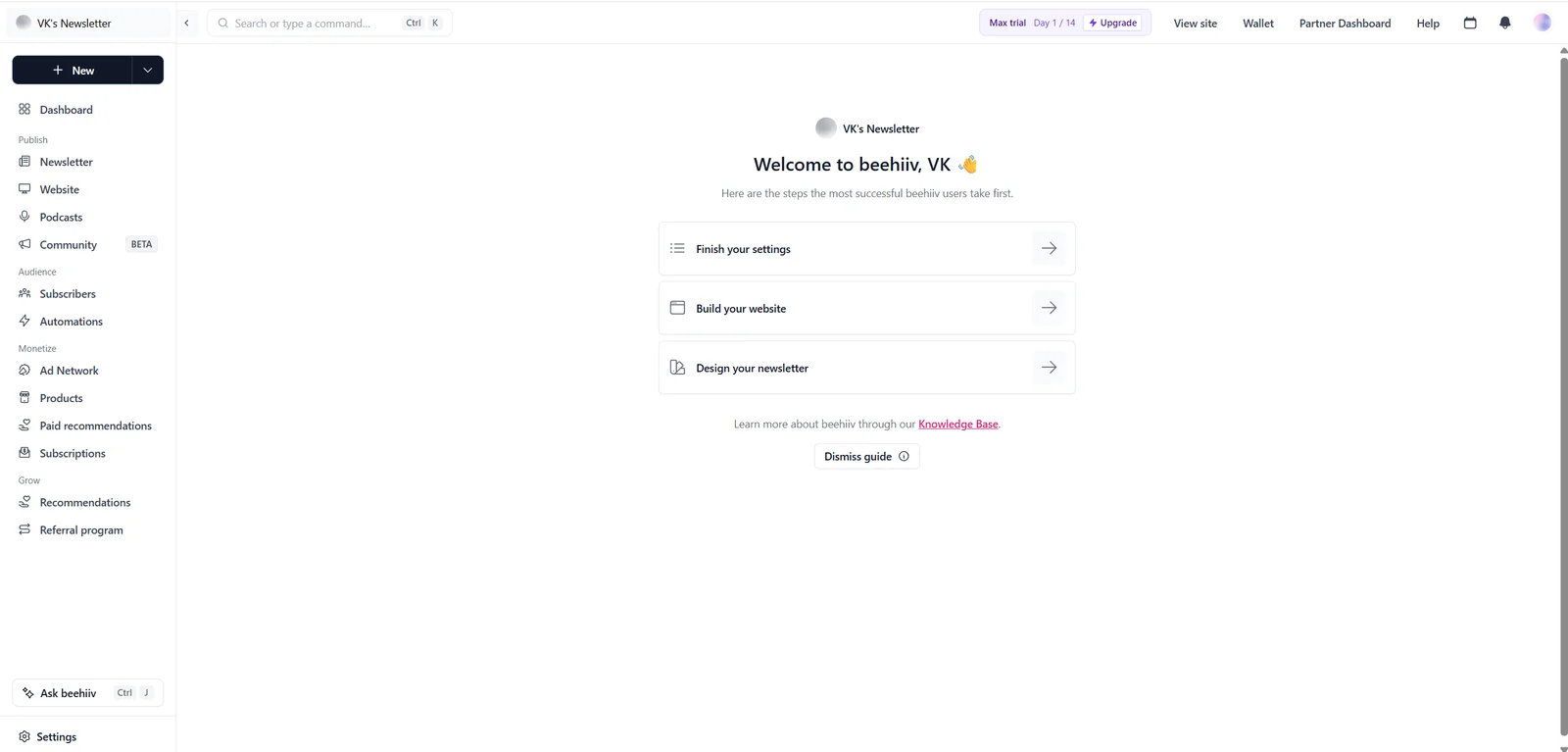
After the verification issue was resolved through a fresh registration, onboarding moved quickly: choose what to build, claim a publication URL, state product interests, and enter the dashboard. The interface consistently presented publication-oriented language rather than making us translate generic campaign concepts into a newsletter workflow.
The quick-start template accelerated testing, though its density also exposed the editor-only `:null:` labels and left substantial sample content below our controlled edits. We intentionally stopped rewriting once title, subtitle, body, two-column layout, links, and autosave were proven. That retained sample copy is not treated as a product defect.
The strongest result was the full publication loop. We compared email/web and desktop/mobile versions, configured audience and metadata, sent a test, opened Read online, published immediately, verified the signed-out public page, received the live message in the primary inbox, clicked the tracked link, reviewed the event data, and downloaded the CSV. Few platforms make email and web feel this closely related.
The one-recipient metrics are useful only as plumbing validation. They prove that the tested message, page, click, and export connected correctly; they do not prove broad inbox placement, engagement quality, or production deliverability. The mailbox display delay during the test send was not measured, and no provider-level cause was established.
We also saw a residual quick-start slug in the publish-success share dialog while the configured and tracked post URL used the new Exploripo slug. The live page itself worked, so this remains a limited UI consistency observation rather than a broken-link claim.
Subscriber records were information-rich. Tagging, however, took more discovery than expected. New tags could not be created inline; `View all` led to central management. The creation dialog accepted the controlled email, but the new tag still showed zero subscribers until we returned to the profile and selected it. The final assignment worked and survived the workflow.
Automation design looked capable, but the plan boundary mattered more than the canvas. In our August 2026 test, the trial let us inspect triggers, nodes, branches, and actions, while the product then required Scale or Max to publish and activate. We stopped before adding an action or a subscriber, so no live automation claim appears in this review. Current documentation instead places automations on paid plans: Lite supports up to 10 live automations, while Pro and Enterprise support unlimited live automations plus click-triggered automations and A/B testing.
We did not execute a public signup form, double opt-in, custom field, subscriber import/export, custom-domain authentication, activated automation, paid subscription, ad or recommendation transaction, referral reward, API/webhook delivery, integration, team workflow, support SLA, cancellation, or production-volume send. These limits reduce the rating confidence around acquisition, automation reliability, and deliverability at scale, but they do not negate the successfully completed core publishing flow.

Kit remains the stronger choice for creator funnels, lead magnets, tagging logic, and email-first automation. Its free plan can support a much larger audience under current limits, while Beehiiv offers the more publication-native site, archive, and newsletter-media experience. Choose Kit when sequences and subscriber journeys are the core product; choose Beehiiv when the publication is.
MailerLite is a broader small-business email-marketing platform with landing pages, conventional campaigns, approachable automation, and a lower-cost paid entry in many list sizes. Beehiiv feels more coherent for a newsletter brand and stronger in publisher-specific growth and monetization. MailerLite is easier to justify when forms, business campaigns, and general-purpose lifecycle messaging matter more than a public publication.
Substack is the simpler hosted writing and community choice, with built-in discovery and minimal setup. Beehiiv offers more control over growth, analytics, branding, web publishing, referrals, and monetization mechanics, while Substack charges a 10% platform fee on paid subscriptions under its current model. Choose Substack for simplicity and network effects; choose Beehiiv for a more configurable publisher stack and paid-plan 0% platform take rate.
Marketing & Email
Free plan available
Best for: Creators building and monetizing an email audience in one platform
Kit is the closer creator-email alternative when forms, sequences, automations, and digital selling matter more than a publication-native archive.
View review
Marketing & Email
Free plan available
Best for: Creators and small teams that want polished newsletters, targeting, analytics, and modest automation
MailerLite is the value-oriented alternative for conventional email marketing and landing pages.
View reviewBeehiiv’s 8.8/10 sits just below Exploripo’s completed MailerLite score of 9/10 and below Kit’s 10/10. The gap is not about the core newsletter editor: Beehiiv’s email-plus-web workflow was excellent. It reflects test completeness and plan economics. MailerLite completed a broader small-business campaign workflow in its review, and Kit’s canonical review validated a particularly strong creator funnel and subscriber path. Beehiiv’s live form and activated automation remained untested here.
Against AWeber’s 8.5/10, Beehiiv feels more modern and publication-native, with cleaner email/web continuity and a stronger free audience allowance. AWeber remains credible for traditional small-business list building and support-oriented users. Beehiiv is the better fit when editorial identity, a public archive, growth loops, and newsletter monetization are central.
The practical current breakpoint is simple: Free is compelling for a young publication that can live without automation and white-label output. Lite becomes rational when lifecycle messaging or monetization has clear operating value. Pro is the publisher-operations plan for unlimited live automations, branding removal, dynamic content, higher limits, and more advanced support.
| Detail | Current review Beehiiv | Kit (ConvertKit) Kit is the closer creator-email alternative when forms, sequences, automations, and digital selling matter more than a publication-native archive. | MailerLite MailerLite is the value-oriented alternative for conventional email marketing and landing pages. |
|---|---|---|---|
| Overall rating | 8.8 / 10 | 10.0 / 10 | 9.0 / 10 |
| Price | Free to 2,500 subscribers; Lite from $59/month or $49/month with yearly billing | Free up to 10,000 subscribers | Free up to 250 subscribers; Comfort from $12/month |
| Free plan | Yes | Yes | Yes |
| Free trial | Yes | Yes | Yes |
| Best for | Creators and newsletter-led publishers that want email, a public archive, growth tooling, and monetization in one platform | Creators building and monetizing an email audience in one platform | Creators and small teams that want polished newsletters, targeting, analytics, and modest automation |
Final Exploripo rating: 8.8/10. Beehiiv earns a strong recommendation for creators and newsletter-led teams that want to publish quickly, maintain a public web presence, understand engagement, and grow into referral or revenue features without assembling several products. The controlled workflow was successful from editor to inbox to public page to CSV.
The recommendation is conditional for automation-heavy teams. The Free plan is generous, but live automations start on Lite, and the tested tag workflow was less direct than the publishing workflow. Teams should also test their own signup form, domain authentication, inbox mix, and automation before migration.
Recommendation: Start on Free if your immediate goal is to publish a newsletter and website for up to 2,500 subscribers. Upgrade to Lite when up to 10 live automations or monetization has clear operating value. Consider Pro when unlimited live automations, branding removal, dynamic content, 10 publications, or 10 team seats are real requirements; Enterprise is the route to unlimited seats.
Current plan names, prices, and limits at the 1,000-subscriber tier were rechecked 2026-10-11.